House of Flying Daggers (2004): A Masterpiece of Love and Betrayal
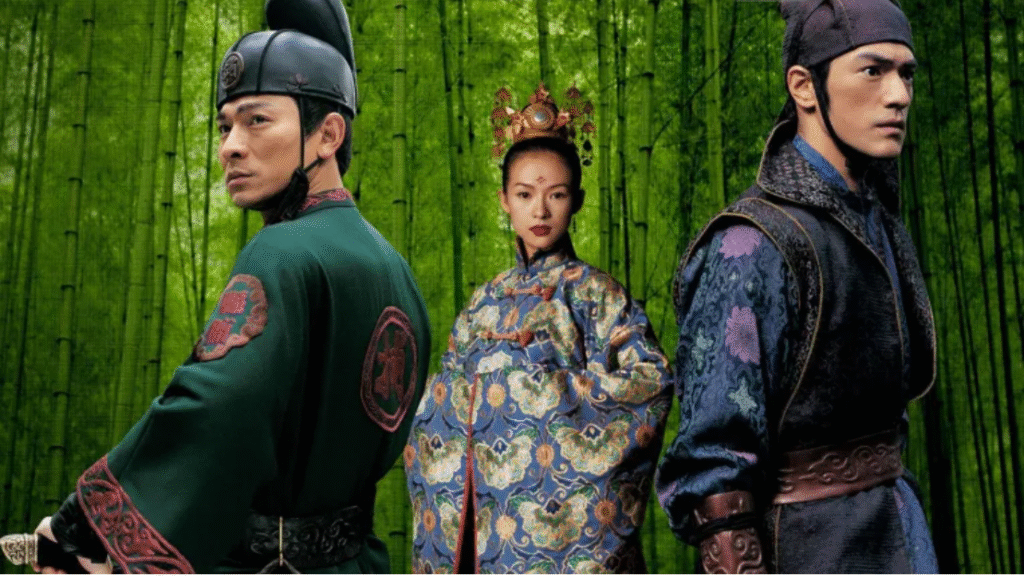
“House of Flying Daggers” is one of the most visually breathtaking martial arts films ever made. Directed by Zhang Yimou, this 2004 epic combines the grace of ancient Chinese culture with a tragic story of love, loyalty, and sacrifice. Set during the Tang Dynasty, the film takes viewers on a mesmerizing journey through forests of falling leaves, bamboo groves, and snowy fields — each scene more poetic than the last.
At its heart, the story follows two government officers, Jin (Takeshi Kaneshiro) and Leo (Andy Lau), who are sent to track down the mysterious rebel group known as the “House of Flying Daggers.” The rebels are admired for fighting against a corrupt government, and the officers’ mission becomes complicated when they encounter Mei (Zhang Ziyi) — a beautiful, blind dancer who may have ties to the rebellion. What begins as a simple mission turns into a dangerous game of deception, passion, and loyalty.
The film stands out not only for its gripping plot but also for its artistic cinematography. Every frame feels like a painting, where colors, lighting, and movement tell a deeper story. The forest battle scenes are particularly stunning, blending fluid martial arts choreography with the beauty of nature. The vibrant costumes and sweeping camera work turn every fight into a dance — elegant, emotional, and symbolic.
As the story progresses, the line between love and duty begins to blur. Jin finds himself falling in love with Mei, unaware that she may not be who she seems. The deeper they go into enemy territory, the more dangerous their emotions become. Zhang Ziyi delivers a spellbinding performance — her quiet strength and inner conflict make Mei one of the most memorable heroines in Chinese cinema.
The final act of House of Flying Daggers is both heartbreaking and unforgettable. It strips away the grandeur of battle to reveal the raw emotions of its characters. Betrayal and love collide in a snow-covered field, creating one of the most iconic endings in film history. The slow-motion sequences and haunting score elevate the tragedy to near-mythic proportions.
Beyond its romantic tragedy, the movie explores themes of freedom, honor, and illusion. The title itself is symbolic — the “Flying Daggers” are not only weapons but also representations of the unpredictability of love and loyalty. No one in the film is entirely truthful, and every secret cuts like a dagger.
Zhang Yimou’s direction combines emotional storytelling with operatic visual flair, proving that martial arts films can be as poetic as they are thrilling. The film was nominated for the Academy Award for Best Cinematography, and it remains one of the most acclaimed works of modern Chinese cinema. Its universal themes and breathtaking visuals continue to inspire filmmakers and audiences around the world.
In the end, House of Flying Daggers is not just a story of rebellion — it is a story of human hearts trapped between duty and desire. It shows how love can be both a weapon and a wound. The film’s unforgettable imagery and emotional depth make it a timeless classic, a true masterpiece of world cinema.